
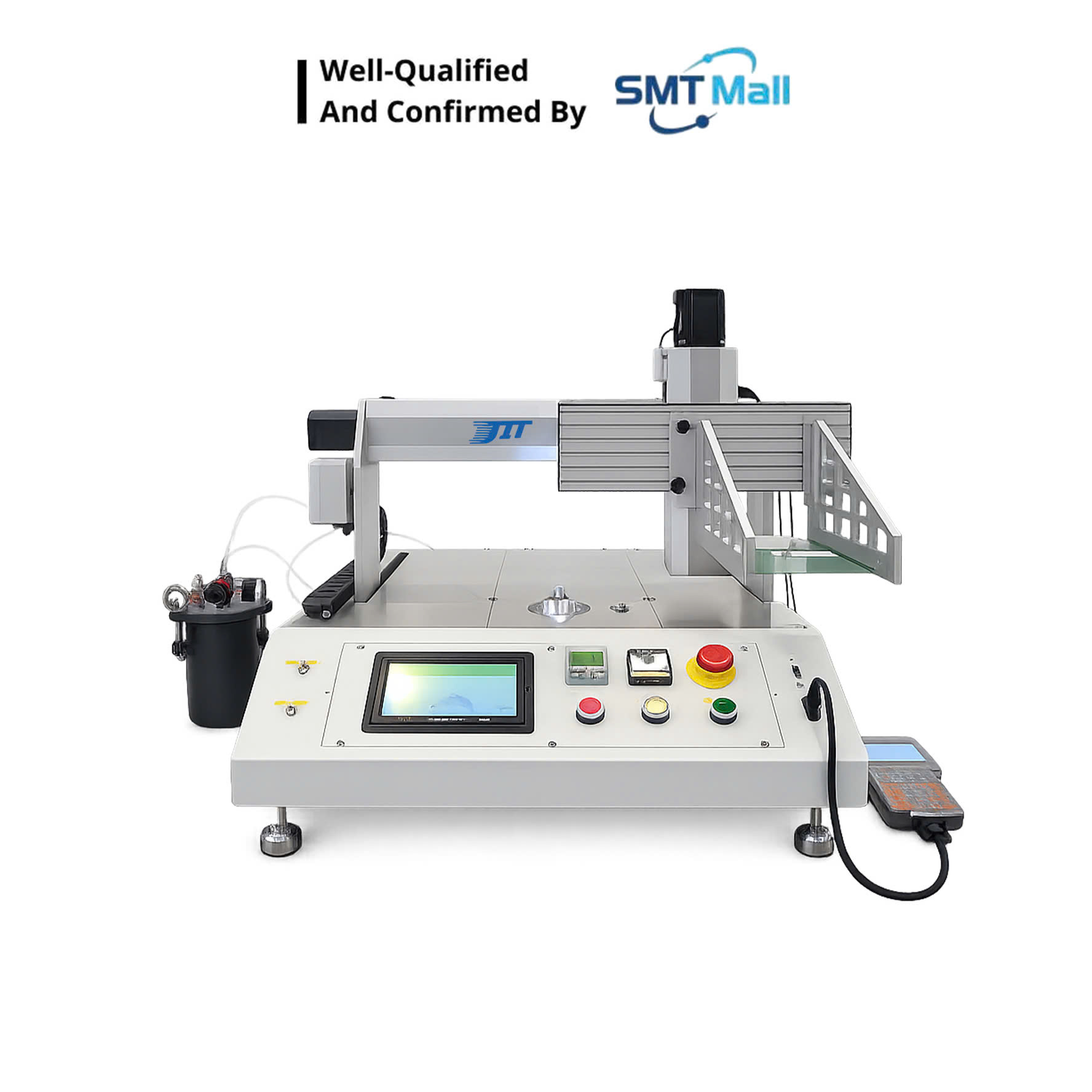
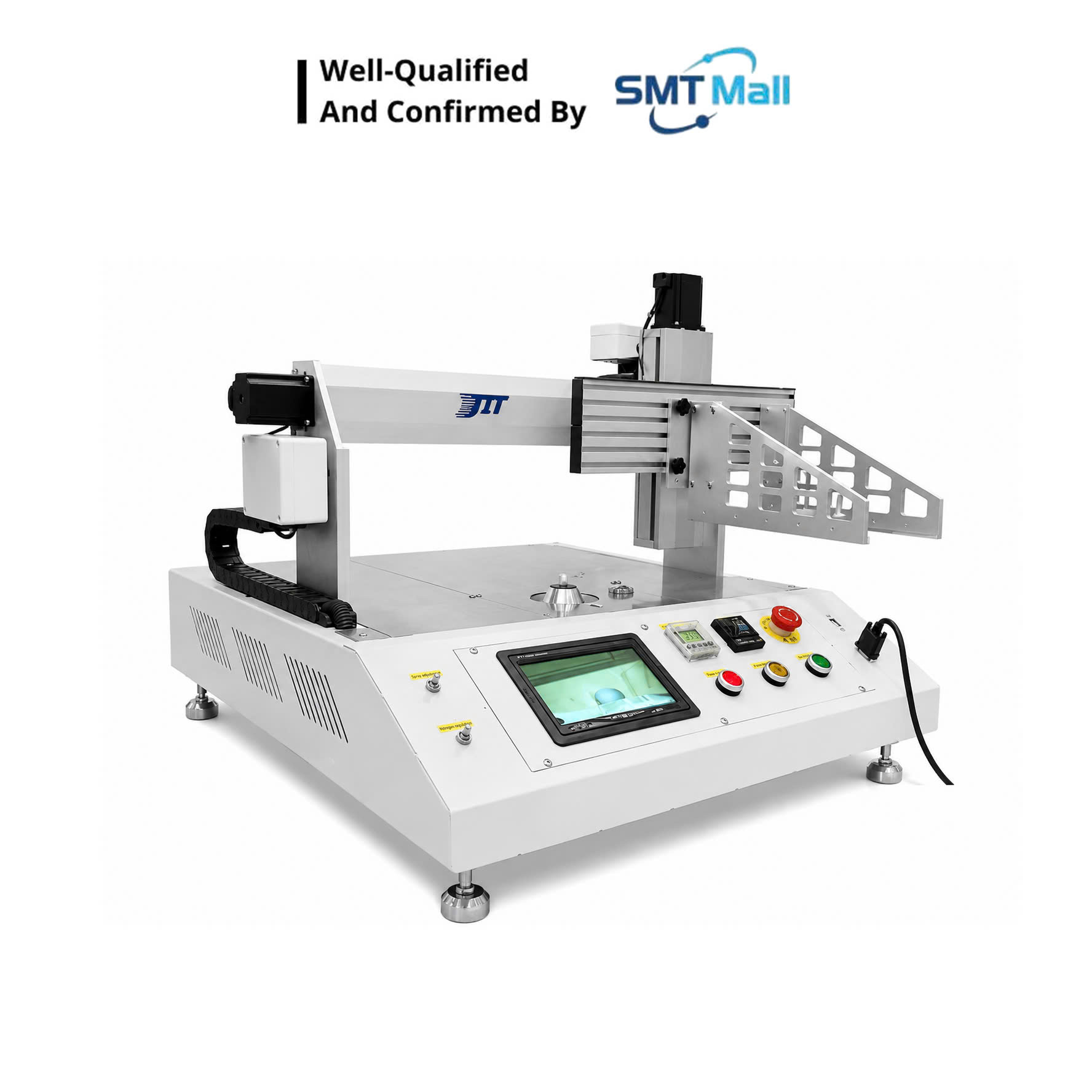
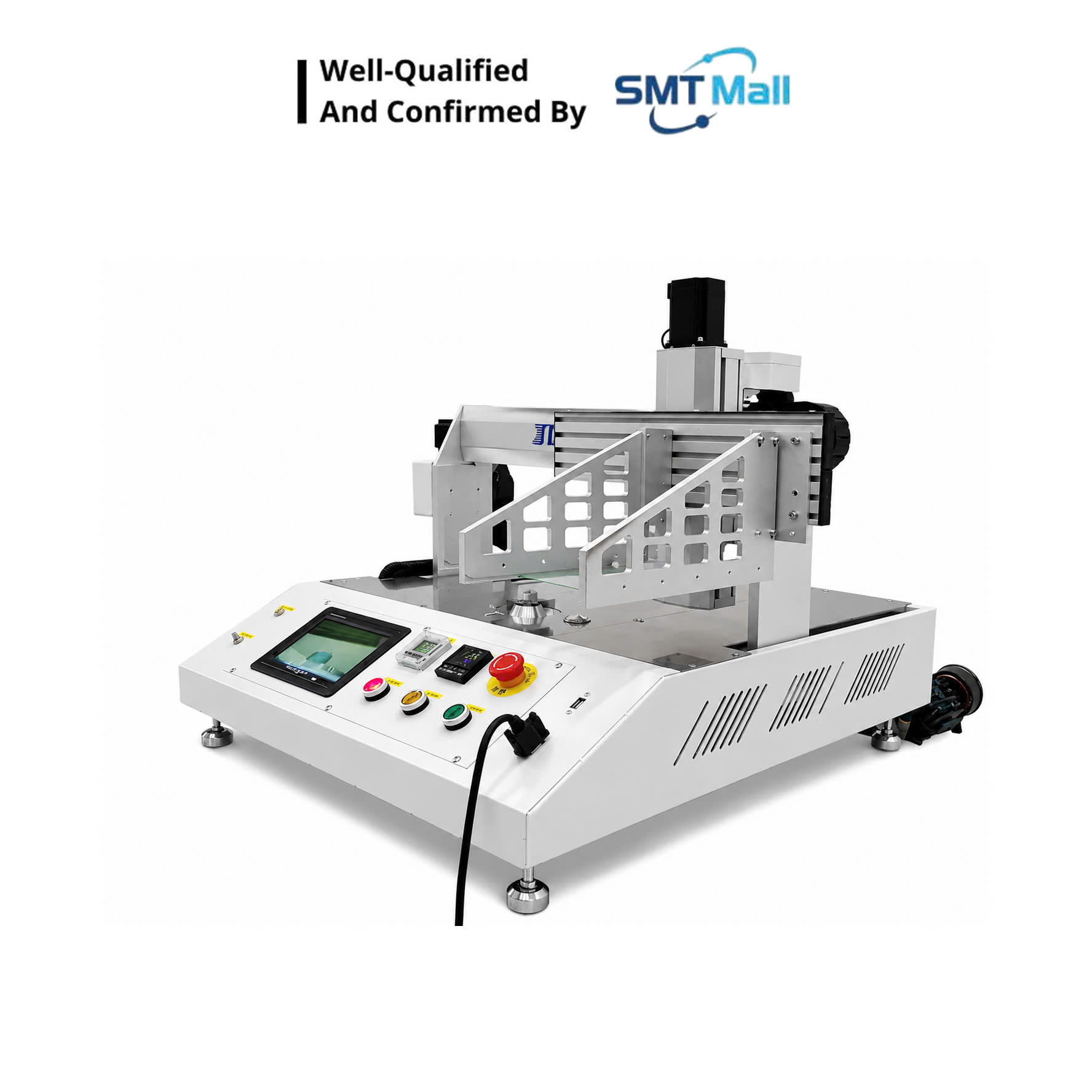
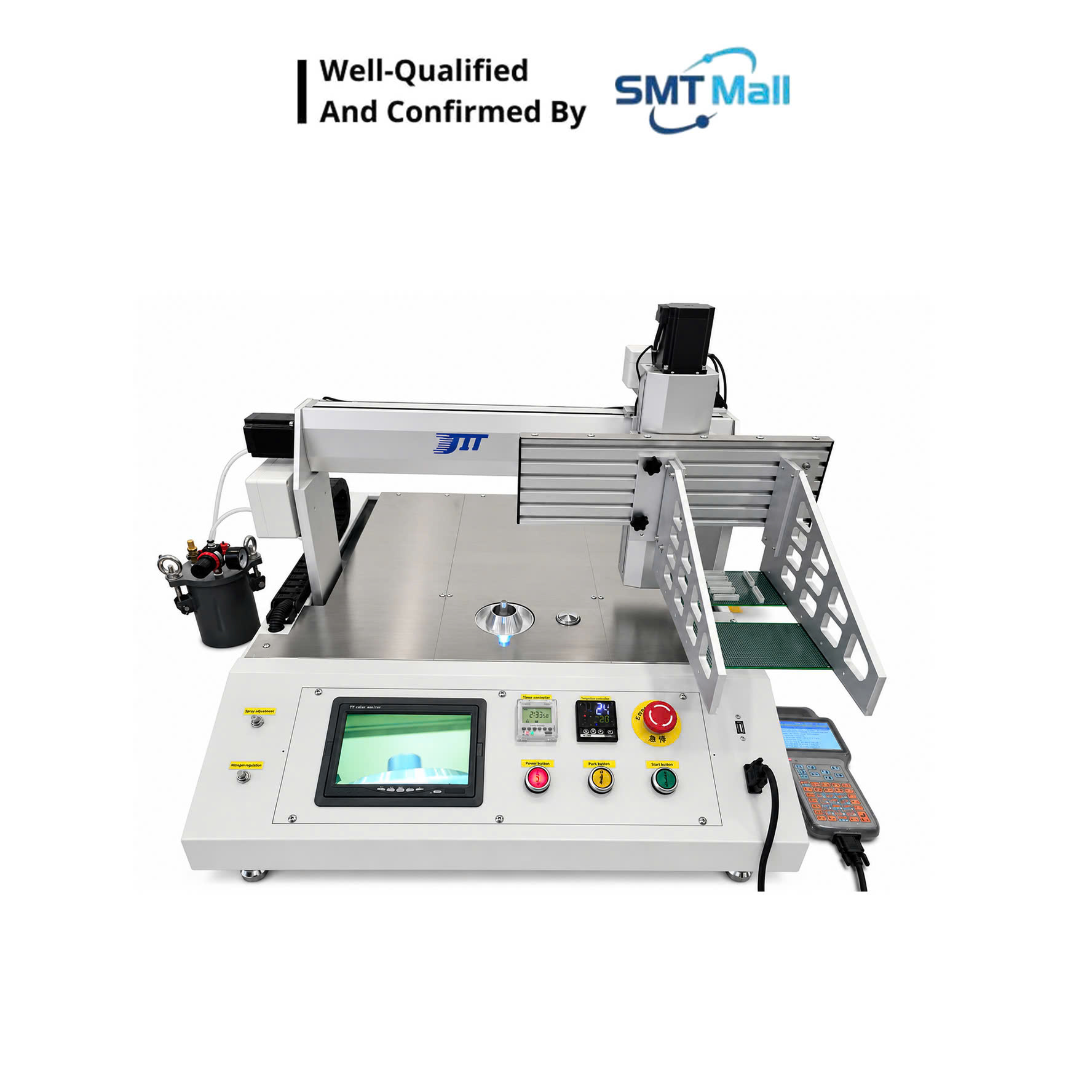
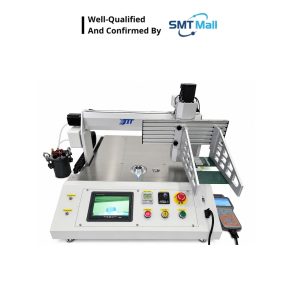
Desktop Selective Wave Soldering Machine
United States dollar ($) - USD
EXW Factory
Final quotation is subject to final confirmation and specifications.
- Automatic spot soldering and drag soldering, high efficiency;
- Capable of soldering all types of PCB boards, easy to solder;
- Die-cast aluminum profile structure — solid, attractive, with high temperature and precision control;
- Microcontroller control + handheld programming box — simple, practical, fully featured, and highly efficient to use;
- Equipped with Japanese Shinano motors, Taiwan Hiwin linear guides, Huayifeng photoelectric sensors, Leadshine drivers, and Hongbo switches — high-spec components for long-lasting durability;
- Free sample service provided — test the results with a sample before purchasing with confidence;
- One-year free warranty service for worry-free use;
- Free technical training, process guidance, and production onboarding support.
Equipment Technical Specifications
| Model | RF-BFH331 Automatic Selective Wave Soldering Machine |
| Range X/Y/Z (mm) | 300/300/100 (size and number of stations customizable) |
| Programming Method | Teach programming or graphic import |
| Available Motion Trajectories | Point, straight line, arc, full circle, curve, polyline, spiral, ellipse |
| Soldering Head | Precision turbine nozzle |
| Flux Pressure Tank | 5 liters |
| Spot Soldering Frequency | 100 mm/second |
| Maximum Load | 10 kg |
| Moving Speed (mm/sec) | 0–500 mm |
| Repeat Precision | ± 0.02 mm |
| Control Method | Microcontroller + handheld programming box |
| Program Storage Capacity | 1,000 sets |
| Display Method | LCD teaching pendant |
| Motor System | Japanese Shinano motor |
| Driver | Leadshine |
| Linear Guide | Taiwan Hiwin |
| Photoelectric Switch | Huayifeng |
| Transmission Method | Synchronous belt |
| Input Power | Full voltage AC 110V ~ 220V |
| External Control Interface | RS232 |
| Dimensions | 540 × 580 × 650 mm |
| Unit Weight (kg) | 58 KG |
Industry Applications
Desktop selective wave soldering machines of this type are well suited to industries that demand high reliability, including automotive electronics, industrial equipment, telecommunications, and medical devices — sectors where PCBs frequently combine surface-mount (SMD) and through-hole (THT) components. This technology is also widely applied across the automotive, medical, and military industries.
Advantages Over Traditional Wave Soldering
- Purpose-built for selective through-hole soldering on PCBs, allowing precise, targeted soldering at individual points without affecting nearby SMD components.
- Conventional wave soldering typically achieves around 75% solder penetration, while selective wave soldering machines can reach up to 100% penetration.
- Compared to full wave soldering, heat input into the board is significantly lower and no solder mask is required — ideal for boards with heat-sensitive components.
- Selective soldering is the preferred choice over traditional wave soldering for complex PCBs, mixed-technology boards, or when only specific areas of the board require soldering.
Compatible Components & Boards
Suitable for soldering connectors, relays, transformers, and other through-hole leaded components on high-density boards or boards combining SMD and THT technology.
Standards & Certifications (Industry Reference)
Selective wave soldering machines in this category commonly meet CE, ISO9001, ISO14001, and RoHS standards, ensuring stable performance and compliance with global requirements.
Nozzle Selection Notes
Key factors to consider when selecting a soldering nozzle include interchangeable nozzle sizes (typically 1–5 mm), laminar flow design to minimize solder splashing, and dual-wave nozzles for soldering adjacent pins simultaneously. The RF-BFH331 comes standard with a Precision Turbine Nozzle, which can be customized similarly to common 4-6-47H style nozzles available on the market.
Related products
Soldering solutions
$ 18,200.00
Soldering solutions
Soldering solutions
Soldering solutions
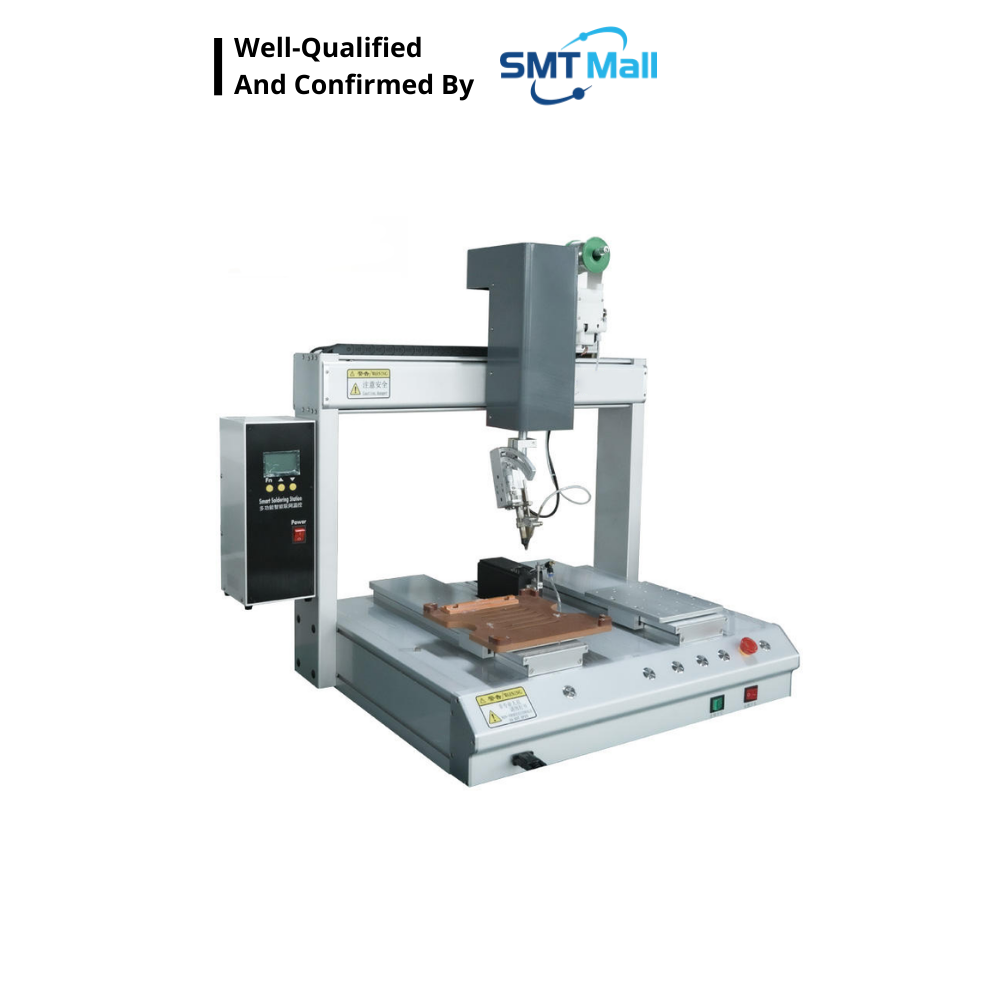
Soldering solutions
$ 4,200.00
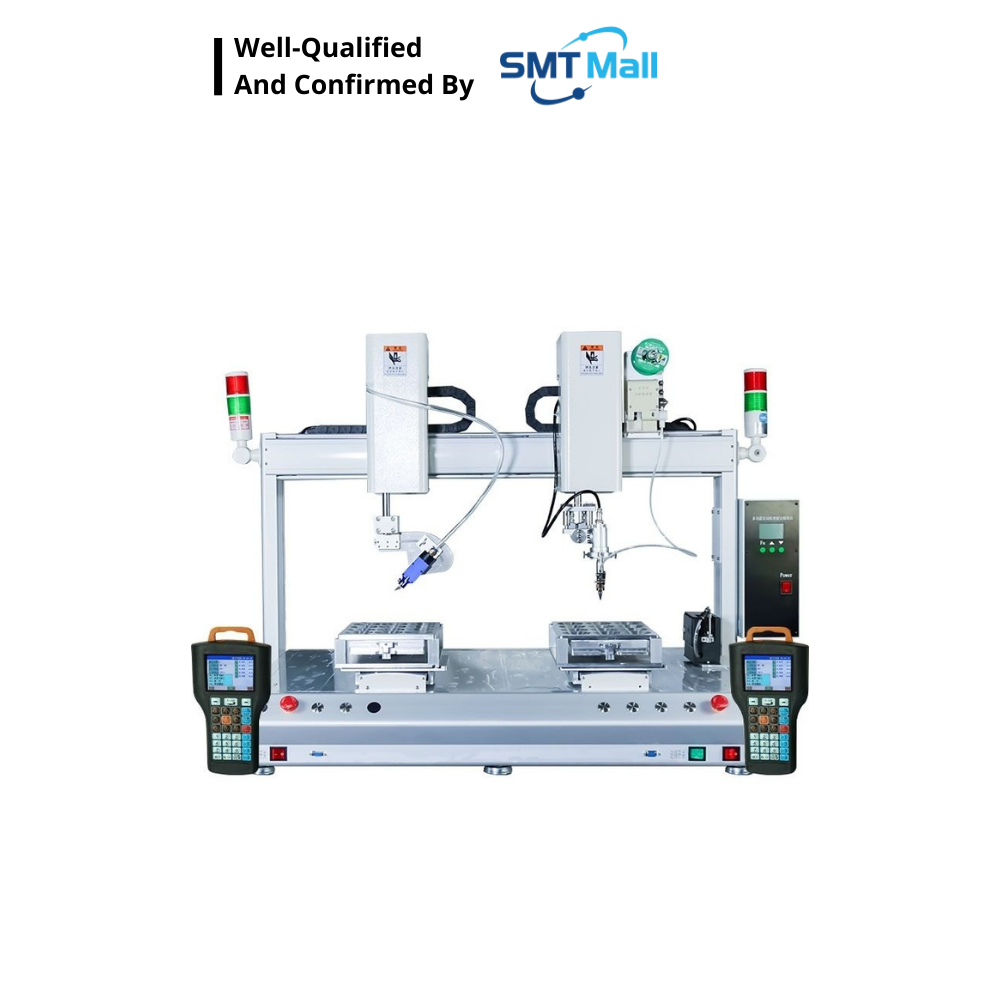
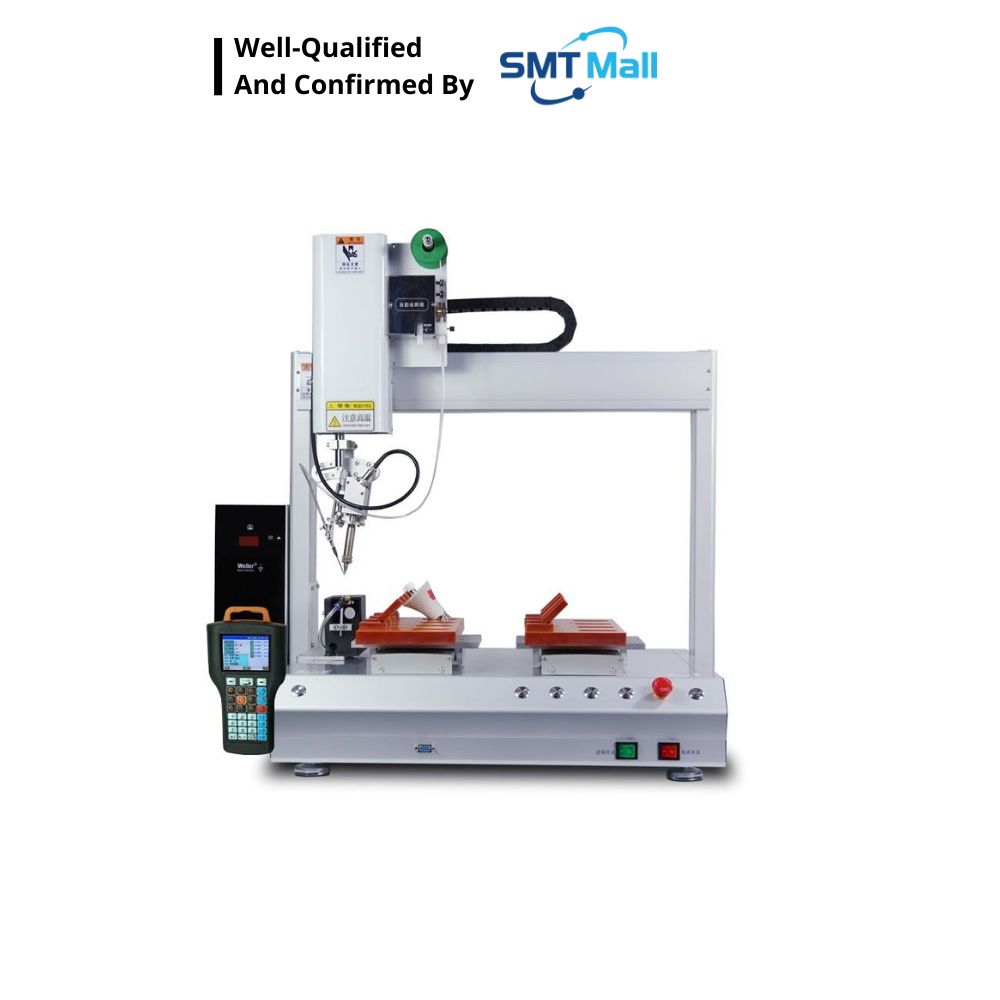
Soldering solutions
$ 3,500.00
Soldering solutions
$ 480.00
Soldering solutions
$ 7,300.00